
Is Waikōloa Village the next Lahaina?
BY Gilian Santiago and Mahealani duPont
SHORT STORY:
Report by Hawaiʻiʻs Attorney General after Lāhainā fire said Waikōloa Village on the island of Hawaiʻi has 100 percent higher risk than any other place in the U.S.
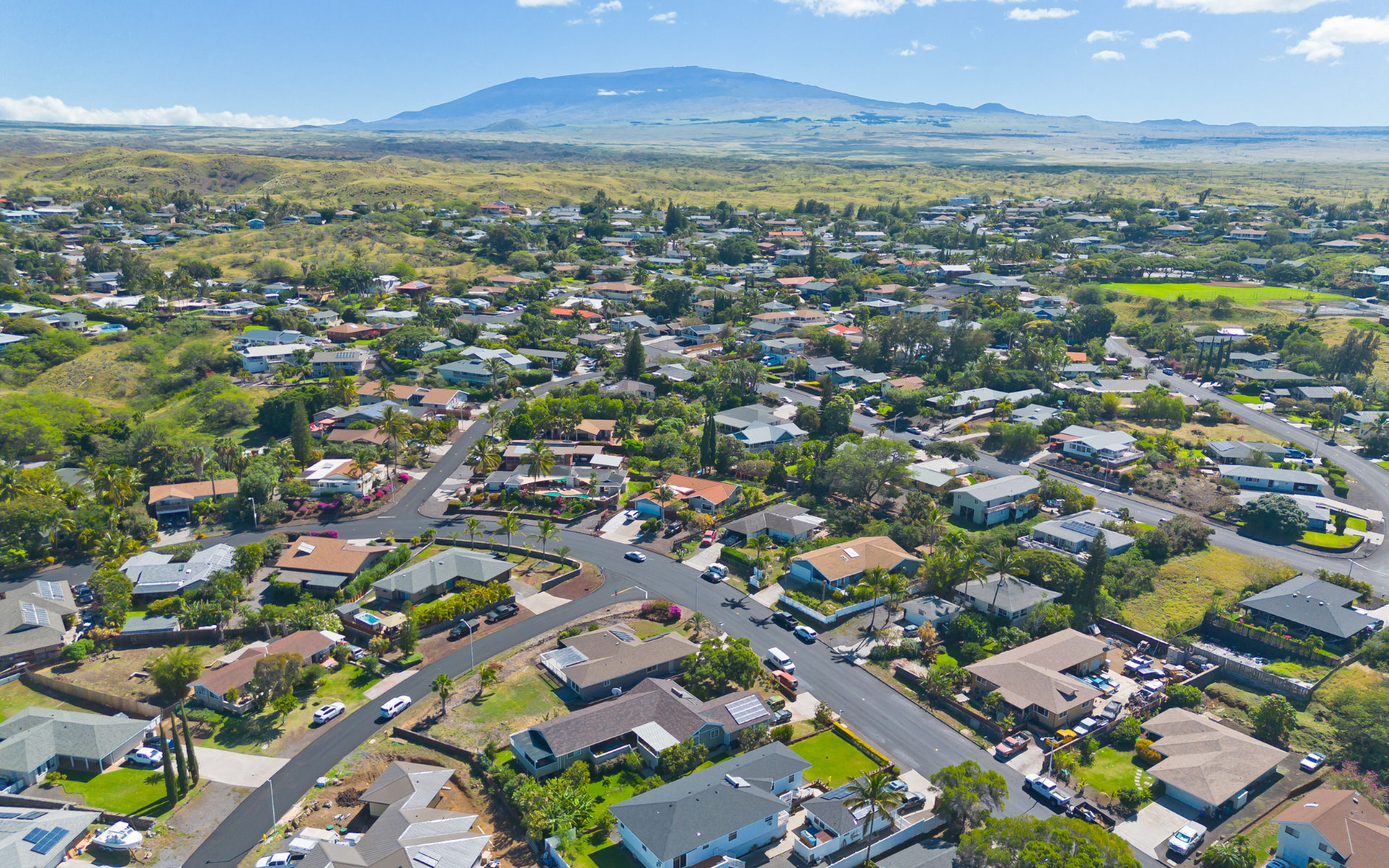
Thereʻs one big difference between Lāhainā and Waikōloa Village: “We don't have an ocean and we are surrounded by invasive grasses.”
Many people who moved into the community didnʻt understand the wildfire risk when they moved into Waikōloa Village.
There is only one road in-and-out of the town and residents want a second road that could cost 25 million dollars. The county council has approved 2.5 million dollars to study a second road.
The state department of transportation is creating a second emergency road for 3.75 million dollars to be used in evacuation scenarios.
Wildfire prevention advocacy groups are very active in Waikōloa encouraging people to take steps to minimize the risk of losing a home to fire.
WAIKŌLOA VILLAGE – This community in South Kohala is grappling with a danger that most residents were unaware of when they bought their homes in one of the places considered to be somewhat affordable for real estate on Hawaiʻi Island. Waikōloa Village is one of the places that the state of Hawaiʻi has a 100 percent risk of wildfire.
After the devastating Lāhainā Wildfire that claimed the lives of 102 people in August 2023, residents of communities like Waikōloa Village might be the next Lāhainā: A place without enough time or safe routes to efficiently and effectively evacuate in the event of a wildfire.
Waikōloa Village residents cite their communityʻs inclusion in the Hawaiʻi Attorney Generalʻs 2024 Lāhainā Fire Incident Analysis Report.
“Hawaiʻi has a very high risk of wildfire — higher than 88 percent of other U.S. states. Lāhainā has a 98 percent higher risk than the rest of the country. Other parts of Hawaiʻi also have extreme risk, for example, Waikōloa Village on the island of Hawaiʻi has 100 percent higher risk than any other place in the U.S.”
Thereʻs one big difference between the communities, said Waikōloa Village resident Aislinn Chalker: “We don't have an ocean and we are surrounded by invasive grasses.”
Chalker was speaking after a community meeting called by the County of Hawaiʻi to launch the Waikōloa Village Evacuation Traffic Study. The meeting was packed with residents highly concerned and emotional about living in the next Lāhainā.
While Waikōloa Village shares a name with the coastal Waikōloa resort communities, Waikōloa Village is a 15-minute drive from the ocean. Jumping into the ocean, as many Lāhainā fire survivors did, isnʻt an option for Waikōloa Village residents if a fire reaches their community.
Waikōloa Village is home to an estimated 10,000 people, which fluctuates with the seasons (the last official U.S. census in 2020 said the town had around 7,000 full-time residents.) The community, with its housing developments and expanded shopping areas, is one of the fastest growing communities on Hawai’i Island.
Waikōloa Village residents fear what happened in Lāhainā when traffic came to a standstill during the disastrous evacuation. Waikōloa Road, which cuts through pasture land and lava fields, is the only way in and out of the town by car. Itʻs an eight-minute drive maikai to Queen Kaʻahumanu Highway and a 10-minute trip mauka to Mamalahoa Highway.
The Village is A Gigantic Cul-de-Sac
Waikōloa Village was first developed in the 1970s by Boise Cascade – the lumber company – as a golf retirement community. Before the construction of Waikōloa Village there weren’t significant populations that lived in the area. The area is hot, arid and often very windy, conditions that are ideal for wildfire.
The feared wildfire would come mauka from the slopes of Mauna Kea. High winds would drive the flames quickly across the grassland leaving residents with little time to escape toward the ocean on Waikōloa Road. Going up toward Mamalohoa Highway would likely be driving into the flames. That means going down Waikōloa Road to Queen Kaʻahumanu Highway is the only full-time way out.
The possible bottleneck has the Hawaiʻi Department of Transportation and County of Hawaiʻi working toward more possible solutions to effectively and efficiently evacuate the town. The community is darkly called a gigantic cul-de-sac.
Chalker, who grew up on Oʻahu, says a significant problem for Waikōloa Village is that many people who moved into the community didnʻt understand the wildfire risk when they moved into Waikōloa Village 10 years ago.
“Imagine working your whole life and then using your retirement money and buying a now one million dollar home and then finding out you're in the highest wildfire risk area on the island,” Chalker said. “And I mean us too, my husband and I, we bought this house and we were so excited we could afford our first home.”
Chalker said she had no awareness of the fire threat the first six years she lived in Waikōloa Village. “And then we started having a couple of fires up mauka and we started to really think about it. Then we evacuated [during the Mana Road fire in 2021] and we thought, oh my God, nobody ever told us about it. We never thought about this.”
On Hawaiʻi Island during a real estate transaction, there are disclosures required about lava flow zones (Waikōloa Village is in the zone with the second-lowest risk. Tsunami and eruptions are threats.) However, there arenʻt similar disclosures for wildfire.
“We actually tried to engage the Hawaii Realtors Association to see what we could do to get disclosures put in when people buy just to say this is a high wildfire risk area and you should know and these are the things you should do,” said Chalker. The effort was unsuccessful.
Chalkerʻs family has prepared a go-bag: “We're ready to go right now if we had to.”
But knowing when to go is a concern for Waikōloa Village residents. After all, the sirens didnʻt sound in Lāhainā and lives were lost. Would the call to leave come in time?
There are concerns about the time needed to evacuate the community. This is a concern not only in Waikōloa Village, but across the state. When the State of Hawaiʻi issued evacuation orders for possible tsunami late last summer (Waikōloa Village is outside of the tsunami zone,) there were hours of warning time, yet still there were areas of gridlock. The time to respond to the threat of a wildfire could be much shorter.
Another complication is a tactic that Hawaiian Electric adopted in the wake of Lāhainā was power safety power shutoffs (PSPS). Shutting off power lowers the risk of power lines or other equipment sparking fires. However, it also can cut power to information sources people follow to help them make decisions on whether and when to evacuate.
The County of Hawaiʻi reappropriated funds last spring to hire KLD Associates, a traffic management consulting firm based in Texas, to help with evacuation plans. The county held a community meeting in Waikōloa Villageʻs golf course at the beginning of January and the consultants announced that they were launching a survey of the community.
The survey is meant to help the County of Hawaiʻi figure out how long it would take to evacuate a family safely from Waikōloa Village. However, for many residents, the answer to the wildfire problem was frustratingly obvious: Waikōloa Village needs a second full-time road in-and-out of the community.
Creating Another Way Out
There is already more than one way out of Waikōloa Village. Thereʻs an emergency road that runs roughly parallel to Waikōloa Road. Itʻs accessed at the end of Hulu Street and the County of Hawaiʻiʻs Civil Defense agency gives residents of Waikōloa Village the opportunity to practice driving on the road twice a year.
The Hulu Street Road is very lightly paved, is curvy and has steep sections. Itʻs intended for evacuees to escape toward the ocean. The escape route leads to a gate not far from the South Kohala Fire Station. There is no possibility of emergency vehicles driving up Hulu Street from the coast because the road is too steep to climb. Emergency vehicles are expected to travel up Waikōloa Road.
After Lāhainā, Chalker helped create a non-profit, Wildfire Safety Advocates of Waikōloa, and the group distributes t-shirts and bumperstickers reading “Second Road for Waikōloa.” She is one of many residents frustrated that the state and the county arenʻt developing a second road and are instead relying on private developers to build infrastructure for the community.
Hawaiʻi county council already set aside 2.5 million dollars for the planning design of a second road. Council member James Hustace, who represents communities in North and South Kohala, sponsored the action. At the community meeting announcing the evacuation study, Hustace spoke about the importance of being prepared for the continuing growth of Waikōloa Village.
“It was important to me hearing from the community that we have public financing behind roads, and that if we are growing a community with county housing, that we also have a responsibility to be at the table to provide that infrastructure,” Hustace said.
A proper second road is thought to cost at least 25 million dollars. The price tag is a limitation along with getting the land to build a permanent second road.
While there isnʻt a second full-time road planned, the state Department of Transportation is creating a second emergency road. The DOT has collaborated with five private landowners to create another lightly paved road that will exit out onto Queen Kaʻahumanu Highway near the Puako Beach Road. Rob Lee, project manager for the state DOT, said the emergency road should be finished by September and cost 3.75 million dollars.
Lee said the road, which will exit at the northern part of the community near Kamakoa Nui Street next to a new planned development called Nana Kai, will be straighter and less undulating than Hulu Street.
“Everybody kept hammering the number two road, the number two road. And I understand everybody's emotional,” said Lee about the residents at the community meeting. “I can understand where they're coming from, but the county was trying to do something better than doing nothing, which is great.”
By the end of the summer there should be three ways out of Waikōloa Village in case of a wildfire. Lee expects that the road will be turned over to the Hawaiʻi County Civil Defense.
“Everybody forgets about what the Mana Road fire was like and what the Waikōloa fires are like, because they don't live here,” said Lee. “We had more fires that everybody else had in the entire state [on Aug. 8, 2023,] but unfortunately Lāhainā one was fast and was deadly. We don't want that happening to our Big Island residents.”
The Mana Road fire started along Old Saddle Road in July 2021 and eventually burned 40,000 acres. [LINK https://vimeo.com/600644715?share=copy]
What Can Individuals Do to Limit Their Risk?
In the meantime, wildfire prevention advocacy groups are very active in Waikōloa encouraging people to take steps to minimize the risk of losing a home to fire. The Hawaiʻi Wildfire Management Organization says an important step is creating a five-foot buffer around your house thatʻs clear of flammable debris.
“Whether your home burns or not, regardless of who said it and what kind of trees or grass or whatever's burning or what, regardless of what your neighbor is doing on their property, what makes or breaks your home is what you have done or not done around that from your outside wall to five feet out. And that is very empowering,” said Elizabeth Pickett of HWMO. “When it comes down to lives and safety, isn't that very hopeful that we can all deal with five feet?”
So is a third way out enough for residents like Chalker?
“At this point, the anxiety of it is too much for our family,” she said. “We've decided to move. And a major consideration for where we're looking is what is the fire risk.”
At the community meeting, the residents seeking a second road left unfulfilled, but attendees were reminded of a clear success story after years of clamoring.
At the main intersection in the heart of this community in South Kohala on Hawaiʻi Island, the long-awaited installation of a stoplight has eased the anxiety of many drivers.
For decades, drivers making turns on Paniolo Drive and Waikōloa Road faced the challenge of making difficult lefthand turns. A stoplight has solved a problem for a community, but it is also a reminder of an anxiety-inducing traffic issue that was resolved.
ABOUT THE AUTHORS
Gilian Santiago is a Hawaiʻi Storytelling Fellow who is a reporter-producer for the Hawaiʻi Radio Hour at Kahilu. She is a graduate of UH-Mānoa and Kealakehe High School. She can be reached at gsantiago@hawaiiradiohour.com.
Mahealani DuPont is a Hawaiʻi Storytelling Fellow who is a reporter-producer for the Hawaiʻi Radio Hour at Kahilu. She is a graduate of Dartmouth and Hawaiʻi Preparatory Academy. She can be reached at mahea@hawaiiradiohour.com.